Children are not small adults, their bones are still growing, and that changes both what can go wrong and how problems are treated.
The reassuring news for parents: most childhood bone and joint “problems”, from flat feet to knock knees, are normal stages of development that children outgrow. The key is knowing which signs genuinely need assessment by a paediatric orthopaedic specialist.
Dr George Oduah provides expert orthopaedic care for children at Mediclinic Sonheuwel, Mbombela, from fracture management to the assessment of walking and limb development.
Call to Book an Appointment WhatsApp Our Practice
Common Orthopaedic Conditions in Children
The conditions we see most often in children include:
- Fractures and growth plate injuries — children’s bones heal quickly, but breaks near a growth plate need careful management to protect future growth.
- Flat feet — very common and usually painless; most children develop an arch naturally as they grow.
- In-toeing, bow legs and knock knees — most are normal variations of development that correct themselves by school age.
- A limping child — a limp without an obvious cause should always be assessed, as it can signal infection or a hip problem.
- Growing pains — real but harmless muscle aches, typically in both legs at night, that never cause a limp during the day.
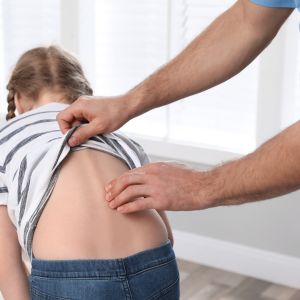
- Scoliosis — a sideways curve of the spine, most often noticed in the early teenage years.
When Should a Child See an Orthopaedic Specialist?
Have your child assessed if you notice:
- A limp lasting more than a day or two, or any limp with fever
- Pain in one leg only, or pain that causes a limp during the day
- Pain, swelling or deformity after a fall — children’s fractures are easily missed
- A foot or leg shape that is worsening rather than improving with age
- One shoulder or hip sitting higher than the other, or an uneven back when bending forward
- A child avoiding play, sport, or walking distances they previously managed
A useful rule for parents: symmetrical and painless is usually developmental; one-sided, painful, or worsening deserves assessment.
How Are Children’s Orthopaedic Problems Treated?
Most childhood orthopaedic conditions need observation rather than intervention.
When treatment is needed, it may include:
- Casting or splinting for fractures — most children’s breaks heal without surgery
- Monitoring growth and alignment over time with periodic reviews
- Physiotherapy for strength, flexibility and sporting injuries
- Bracing for specific conditions such as scoliosis
- Surgery, reserved for fractures that can’t be held in position, growth plate injuries, or deformities that won’t correct with growth
Because children’s bones remodel as they grow, early and correct diagnosis often makes treatment simpler — not more drastic.
Children’s Orthopaedic Care in Mbombela
Dr George Oduah treats children and adolescents at Mediclinic Sonheuwel, with a focus on accurate diagnosis, parent-friendly explanations, and intervening only when a child truly needs it.
Families visit the practice from Nelspruit, White River, Barberton, Hazyview and across the Lowveld.
Call to Book an Appointment WhatsApp Our Practice
Frequently Asked Questions
Are growing pains normal?
Yes. Growing pains are aches in both legs, usually at night, that disappear by morning. Pain in one leg only, daytime pain, or pain with a limp is not growing pains and should be assessed.
Should I worry about my child’s flat feet?
Usually not. Flexible, painless flat feet are a normal stage of development. Assessment is worthwhile if the feet are stiff, painful, or only one is flat.
Does my child need an X-ray after a fall?
If there is swelling, deformity, refusal to use the limb, or pain that persists beyond a day or two, yes — children’s fractures, especially near growth plates, are easily missed.
Do children’s broken bones heal differently from adults’?
Yes. Children’s bones heal faster and can straighten themselves as they grow, so most fractures are treated in a cast. Breaks involving a growth plate need specialist follow-up to protect future growth.